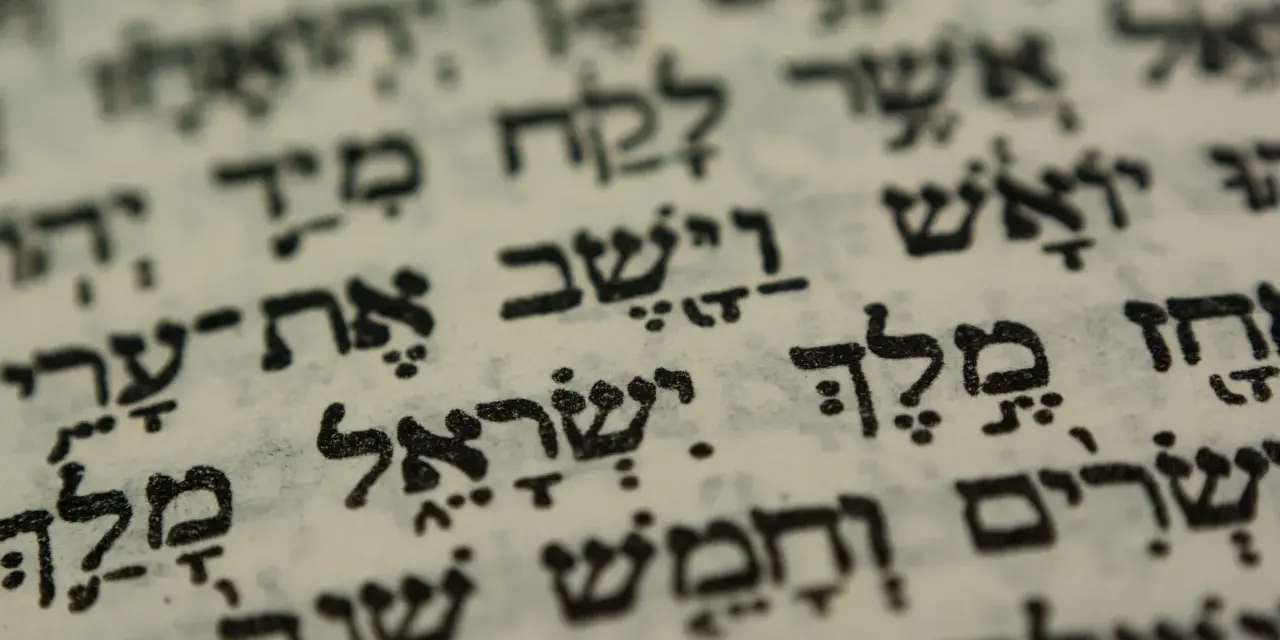
The name Israel carries more weight than many readers expect. The question of what does Israel mean in the Bible opens a story about identity, struggle, blessing, and the people who emerged from Jacob’s life. In Scripture, the word can point to a person, a nation, a covenant community, and even a spiritual posture, so the meaning depends on the passage in front of you.
Israel names a transformed life and a covenant people
- In Genesis, the name is linked to Jacob’s struggle with God and the blessing that followed.
- The exact etymology is debated, but the biblical explanation clearly emphasizes wrestling, endurance, and divine favor.
- Later in the Bible, Israel becomes the name of Jacob’s descendants and, in some contexts, the northern kingdom.
- Prophets and New Testament writers can use the word in broader or narrower ways, depending on the argument they are making.
- The safest way to read the term is to ask which Israel a passage means before drawing conclusions.
The name starts with Jacob, not a nation
I would not reduce Israel to a neat dictionary label. In Genesis, the name is given to Jacob after a night of conflict, blessing, and transformation, and that event is the real interpretive center. The Bible’s own explanation does not read like a detached vocabulary note; it reads like a theological marker that says Jacob’s life has been interrupted and remade by God.
That is why scholars and readers often give the name a sense like “he struggles with God” or “God contends”. The exact etymology is debated, but the biblical meaning is not vague: this is a name tied to wrestling, perseverance, and a changed identity. If you read it too quickly, you miss the force of the story. If you read it carefully, you see that the name is less about labels and more about relationship.
That personal meaning matters, because the story quickly moves from a private encounter to a family line and then to an entire people.
Jacob’s renaming at Peniel changes the whole story
The scene in Genesis is memorable because Jacob does not receive the name Israel in a comfortable moment. He is afraid, alone, and carrying the weight of his history. He wrestles through the night, asks for a blessing, and comes away with both a blessing and a limp. I think that tension is the point. The Bible does not present faith here as easy victory; it presents faith as an encounter that wounds pride and deepens dependence.
That is also why the place gets a name of its own. Jacob recognizes that he has come face to face with God, and that moment becomes part of Israel’s memory. The new name is not just a reward for effort. It signals that Jacob is no longer being defined only by his past as the heel-grabber, the schemer, or the man who lived by grasping. He is being marked by encounter.
In other words, Israel is not simply a heroic title. It is a testimony that God can meet a person in struggle and still bless him. That personal change becomes even bigger when the same name starts naming Jacob’s descendants.
Israel becomes the name of a people
Once Jacob is renamed, the word begins to stretch outward. His sons, grandchildren, and descendants become the children of Israel, and the name starts carrying covenant identity, family memory, and national belonging. Genesis 35 reinforces that expansion when God speaks not only about Jacob’s new name but also about fruitfulness, a future nation, and kings descending from him. The personal story is already turning into a people story.
Here is the clearest way I would separate the main uses:
| Context | What Israel refers to | Why it matters |
|---|---|---|
| Genesis 32 to 35 | Jacob, the patriarch, after his renaming | The word marks transformation and blessing |
| Exodus and the Torah | The descendants of Jacob | The phrase “children of Israel” highlights covenant peoplehood |
| Historical books | The united or divided people of God, depending on the period | Readers have to watch the timeline carefully |
| Prophets | Sometimes the whole covenant people, sometimes the northern kingdom, sometimes a faithful remnant | Context determines the scope of the word |
This is where a lot of readers get tripped up. The same word can refer to a man, a family, a nation, or a smaller covenant subset, and the text usually tells you which one is meant. That flexibility is not a flaw; it is part of how biblical language works. The next question is how later writers use that flexibility to make sharper theological points.
Later books use Israel in narrower and broader ways
After the kingdom divides, Israel can mean the northern kingdom in a political sense, while Judah names the southern kingdom. In the prophets, that distinction matters a great deal. A passage may say “Israel” when it is speaking directly to the northern tribes, but another prophet may use the same word to refer to the whole people of God. If I am reading quickly, I can flatten those uses and miss the force of the passage.
Hosea is a good example because it looks back on Jacob and uses his story to interpret the nation’s present. The prophet recalls Jacob’s struggle and then applies that memory to Israel’s stubbornness, showing that the old story is still speaking. That is a classic biblical move: the name is not frozen in the past. It keeps becoming a lens for present faithfulness or present failure.
The New Testament keeps that pattern going. Paul can speak about Israel in a way that includes the historical people, but he can also speak about a faithful remnant and make a sharper distinction between physical descent and covenant faithfulness. That does not erase Israel’s identity; it deepens it. The same name can therefore carry history, promise, warning, and hope all at once.
The most common mistakes readers make
When I see confusion around Israel, it usually comes from one of a few predictable mistakes. None of them are hard to fix, but they matter if you want to read Scripture carefully.
- Treating every use as identical - “Israel” does not always mean the same thing. Sometimes it is Jacob, sometimes the whole people, sometimes the northern kingdom, and sometimes a theological remnant.
- Missing the covenant background - The name is not only ethnic or political language. It is tied to promise, blessing, and relationship with God.
- Reading later headlines back into the text - The biblical word has its own history. I have to let Genesis, the prophets, and the New Testament speak in their own setting before I apply anything to the present.
- Forcing a single English gloss - “He struggles with God” is helpful, but it is still an interpretation. The biblical writers are doing theology through story, not giving a sterile dictionary entry.
- Ignoring the tone of the passage - Sometimes “Israel” appears in blessing, sometimes in rebuke, and sometimes in promise. The tone tells you how the name is working.
Once you notice those patterns, the word stops feeling confusing and starts becoming a useful guide for reading. That is exactly what good Bible study should do: it should sharpen, not flatten, the text.
What this means for Bible study and daily faith
If I am studying a passage about Israel, I ask three quick questions. First, is the text talking about Jacob the person, the descendants of Jacob, the northern kingdom, or a faithful remnant? Second, is the emphasis identity, rebuke, promise, or restoration? Third, how does the surrounding chapter explain the name through action rather than abstraction? Those three checks prevent most shallow readings.
For personal reflection, Israel also carries a serious spiritual insight. The name reminds me that God does not only bless polished people with clean stories. He meets strugglers. He renames them. He gives them a future that is bigger than their past. That is not a sentimental lesson; it is a hard-earned biblical one.
So if I had to give the shortest possible answer, I would say this: Israel is the name of a person transformed by encounter with God, and then the covenant people who came from him. Read the name in context, and it will keep opening the text instead of closing it down.