
The gifts of the Holy Spirit are not spiritual decorations; they are ways God equips believers to serve, strengthen the church, and make Jesus visible in ordinary life. I’m going to walk through what Scripture means by these gifts, how the main biblical passages fit together, why Christians disagree on some details, and how to recognize and use your own gifting with wisdom. If you have ever wondered whether a gift is real, how it differs from talent, or how it should actually show up in church, this will give you a grounded starting point.
What you need to know first
- Spiritual gifts are given for service, not self-promotion.
- Scripture presents several overlapping gift lists, not one fixed inventory.
- The clearest test of a gift is whether it builds up other believers and honors Christ.
- Christians disagree on some gifts, especially tongues, prophecy, and healing.
- Character still matters: gifts are never a substitute for love, humility, and obedience.
What Scripture means by spiritual gifts
In plain terms, I think of spiritual gifts as Spirit-enabled capacities for ministry. They are not earned, and they are not the same thing as natural talent. A person may already have a skill for teaching, music, administration, or problem-solving, but the Holy Spirit can shape that ability into something that serves other people in a distinctly Christian way.
That distinction matters because many people only look for the spectacular. Scripture does include dramatic expressions, but it also includes quiet, practical gifts that keep a church healthy: encouragement, mercy, service, leadership, generosity, discernment, and wise teaching. The real question is not whether a gift looks impressive, but whether it helps people grow in faith and love.
| Category | What it is | Main purpose | What it often looks like |
|---|---|---|---|
| Spiritual gifts | Spirit-given abilities for ministry | Serve the church and point to Christ | Teaching, mercy, healing, encouragement, leadership |
| Fruit of the Spirit | Christlike character formed over time | Show what maturity looks like | Love, joy, peace, patience, kindness |
| Natural talents | Inborn or trained human abilities | Support work, creativity, and communication | Music, organization, writing, design, analysis |
The healthiest Christian life includes all three. Gifts without fruit become hollow, fruit without service becomes inward-looking, and talent without surrender can stay purely self-directed. Once that framework is clear, the next step is to look at the biblical passages that shape the discussion.
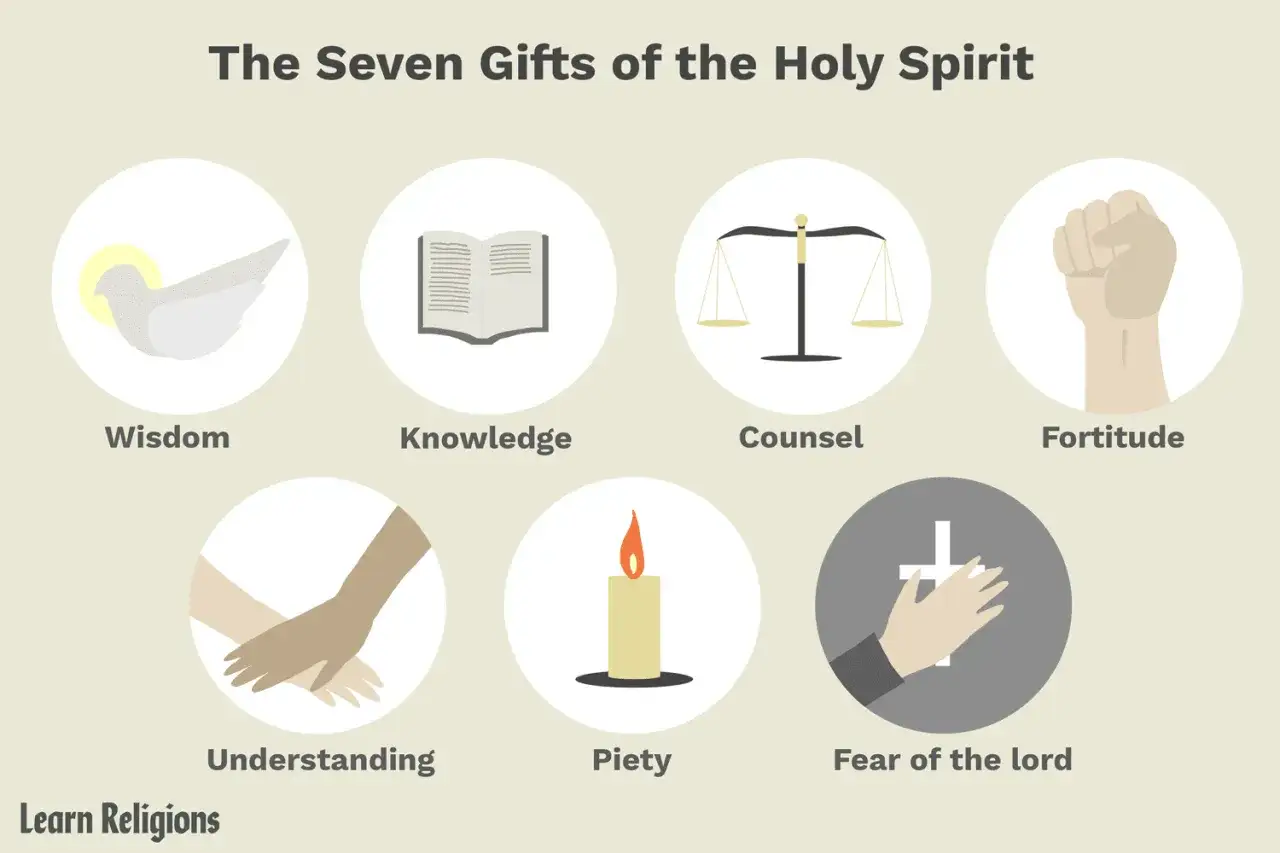
The main biblical passages and what each one emphasizes
When I read the New Testament, I do not see one neat master list. I see several passages that highlight different angles of the same reality. That is useful, because it keeps us from flattening spiritual gifts into a checklist.
| Passage | Main emphasis | Examples mentioned | Why it matters |
|---|---|---|---|
| 1 Corinthians 12 | Diversity, unity, and the common good | Wisdom, knowledge, faith, healing, miracles, prophecy, tongues, interpretation | Gifts differ, but the same Spirit works through them |
| Romans 12 | Everyday service and practical discipleship | Serving, teaching, encouraging, giving, leading, mercy | Many gifts are ordinary, visible, and deeply needed |
| Ephesians 4 | Church maturity and equipping | Apostles, prophets, evangelists, pastors, teachers | Leadership gifts exist to build up the whole body |
| 1 Peter 4 | Grace-filled speaking and serving | Speaking and serving in God’s strength | Ministry should depend on God’s supply, not ego |
What stands out to me is the pattern: diversity, usefulness, and shared purpose. Scripture does not treat gifts as private trophies. It treats them as resources for the church. That naturally raises the question of how these gifts connect to God, Jesus, and the life of the church.
How these gifts point to God, Jesus, and the church
The gifts are not an end in themselves. They are part of God’s way of strengthening his people through the Holy Spirit, centered on Jesus and ordered toward the good of others. I think that triune shape matters because it keeps the whole subject from drifting into personality worship or spiritual performance.
- They are Christ-centered. Jesus is not competing with the gifts; he is the one they are meant to reveal. If a ministry expression draws attention away from Christ, it has lost its direction.
- They are communal. Gifts are given for the body, not just for the individual who receives them. In other words, the church is meant to benefit.
- They are strengthening tools. The purpose is maturity, encouragement, and faithful witness, not spiritual status.
- They are governed by love. Without love, even an impressive gift can become noisy, self-protective, or manipulative.
Why Christians disagree on some gifts
Not every Christian tradition reads the gift passages the same way. Some churches take a continuationist view, meaning they expect gifts like prophecy, tongues, and healing to remain active in the church today. Others take a more cessationist view, meaning they believe some signs were closely tied to the apostolic foundation of the church. Both sides usually appeal to Scripture, and both sides are trying to protect the church from error.
That disagreement becomes less confusing when you separate the main concern from the secondary one. The main concern is whether the Spirit still equips believers for ministry. The secondary concern is how specific gifts should be tested, practiced, and interpreted. I think the healthiest posture is neither hype nor cynicism. It is openness with discernment.
There is a lot of room for humility here. Some believers have seen abuse, pressure, or emotional manipulation around spiritual gifts, so they are cautious. Others have seen churches become so cautious that they quietly expect very little from God. Neither extreme is ideal. The question is not whether we can control the Spirit, but whether we are willing to receive, test, and use what he gives in a biblical way. That brings us to the practical issue of recognizing your own gifting.
How to recognize your own gifting
I do not think most people discover their gifts through a single dramatic moment. More often, they notice a pattern over time. The gift becomes clearer as they serve, receive feedback, and see what actually helps others.
- Notice where fruit appears repeatedly. If people are regularly built up when you teach, encourage, organize, pray, or serve, that pattern matters.
- Ask mature believers for honest feedback. People who know you well can often see strengths you overlook.
- Test your instincts in real ministry. A gift is easier to discern in action than in theory.
- Look for consistency, not hype. One emotional high point is not the same as a stable gifting.
- Check for alignment with Scripture and character. A gift that pushes you toward pride, confusion, or disobedience is not healthy, no matter how strong it feels.
One test I come back to often is this: does the gift become clearer when it is used in service, or does it stay vague unless someone draws attention to it? Real gifts usually become more evident under responsibility. With that in mind, the next thing to watch for is the ways people distort the whole subject.
Common mistakes that distort spiritual gifts
Most confusion around spiritual gifts comes from a few predictable errors. I see these often enough to say they are the rule, not the exception.
- Chasing the dramatic instead of the useful. Not every gift is spectacular, and some of the most needed gifts are quiet.
- Assuming a gift proves maturity. A person can operate in a gift and still need serious growth in character.
- Using a gift as an identity label. A gift is something you steward, not a badge that makes you spiritually superior.
- Ignoring accountability. Gifts work best when they are tested in community, not protected from it.
- Comparing yourself with others. Comparison usually produces insecurity, competition, or imitation instead of faithful service.
I have rarely seen a healthy ministry built on envy. What I have seen is people becoming more useful when they learn to serve consistently, stay teachable, and stop asking every question through the lens of status. That is why the best final step is usually the simplest one: put what you believe into practice in a real, grounded way.
A grounded way to use them this week
If you want to move from theory to practice, start small and stay honest. Choose one place where you can serve, one mature believer who can speak into your life, and one habit of prayer that keeps you dependent on God. Then give it enough time for fruit to show up before you judge the result.
- Serve where there is a real need, not just where you feel interested.
- Ask for feedback from someone who knows how to recognize healthy ministry.
- Measure success by whether people are built up and Jesus is honored.
The goal is not to collect a spiritual label. It is to become more useful to the body of Christ, more attentive to the Holy Spirit, and more like Jesus in the way you love and serve other people.