
Communicating the Christian message works best when truth, tone, and the life of the church belong together. In practice, sharing the gospel is not only about saying the right words; it is about speaking clearly, listening well, and pointing people toward Christ in a way that fits real life. That matters especially in the United States, where many people will ignore pressure but respond to sincerity, consistency, and a faith community that actually lives what it says.
The clearest gospel witness joins truth, relationship, and sacramental life
- Gospel communication is proclamation, not a sales pitch or a vague spiritual chat.
- Baptism and Communion give the message visible shape and help people see faith as embodied, not abstract.
- A simple pattern works well: listen, connect, explain, and invite a next step.
- Plain language usually helps more than insider jargon, especially with people outside church culture.
- Churches make witness easier when worship, teaching, hospitality, and follow-up work together.
- The most common mistakes are vagueness, pressure, and sacramental language that is never explained.
What gospel communication is really trying to do
I think the most useful starting point is simple: the goal is not to win an argument or perform religious confidence. The goal is to announce good news about Jesus, invite a response, and help someone see that the message is not just public truth but personal truth. That is why the best Christian conversations are clear without being harsh, and warm without becoming vague.
In church settings, this usually means more than a one-time conversation. It includes testimony, invitation, prayer, teaching, and the slow work of helping someone understand what repentance, faith, and discipleship actually mean. The word catechesis is useful here because it simply means structured Christian teaching, the kind that prepares people to understand and live the faith rather than merely hear about it.
When I frame it this way, I avoid a common mistake: treating evangelism like a technique. It is more honest to call it a witness that speaks, listens, and persists. Once that is clear, the next layer is how the church’s sacramental life gives the message visible form.
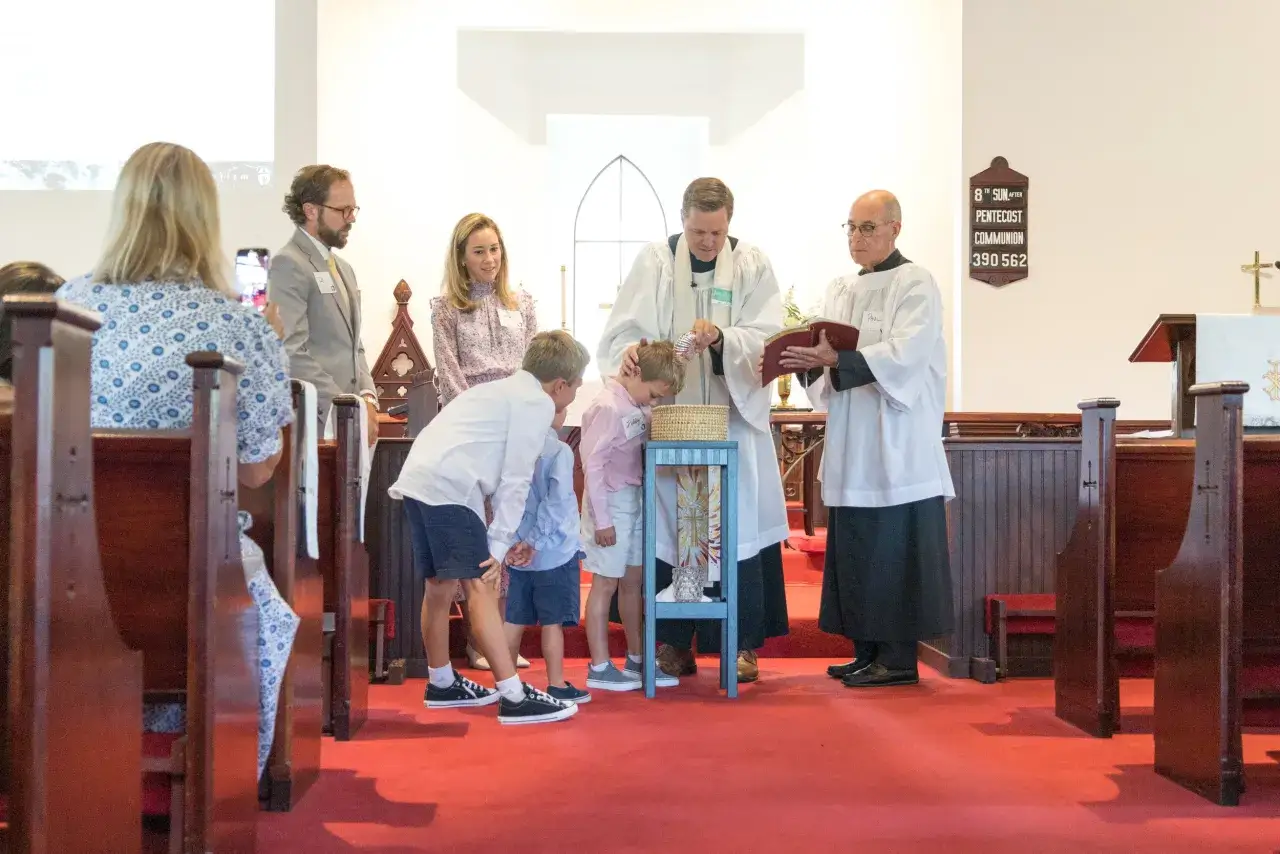
How baptism and Communion give the message a visible shape
One reason gospel witness becomes credible is that the church does not only explain salvation, it enacts it. Baptism tells the story of cleansing, belonging, and new life. Communion, or the Lord’s Supper, tells the story again from another angle: Christ gives himself, believers remember his sacrifice, and the church is gathered as one body around grace rather than self-improvement.
I do not treat sacraments as decorative moments. They train the imagination. They tell people that Christianity is not just an opinion system, it is a life entered, received, and practiced. In traditions that include confirmation or reconciliation, those moments deepen the same logic: belonging leads to formation, confession leads to forgiveness, and forgiveness leads to mission.
| Sacramental moment | What it says | Why it matters for witness |
|---|---|---|
| Baptism | New life, cleansing, public belonging to Christ | It shows that faith is not private sentiment but entry into a community with a story |
| Communion or the Lord’s Supper | Remembrance, dependence, unity, and grace received | It keeps the gospel centered on Christ’s work rather than human effort |
| Confession and reconciliation | Repentance, forgiveness, and restored relationship | It gives people a real pattern for dealing with sin instead of hiding it |
That reciprocal relationship matters: faith gives sacramental practice meaning, and sacramental practice reinforces faith. If either side gets detached from the other, the message starts to feel thin. With that in mind, the next question is how to speak naturally when an actual opportunity appears.
A simple way to speak clearly without sounding rehearsed
I usually start with the person’s actual concern, not with my favorite verse. People are more open when they feel heard, and gospel conversations become more honest when they begin where real life is happening. A useful pattern is only three moves long, which keeps it memorable without making it mechanical.
- Listen first. Ask what they believe, what they hope for, or what they are carrying right now.
- Connect the gospel to that need. Explain the Christian claim in ordinary language, not religious code.
- Offer a next step. That might be prayer, Scripture, a church visit, a conversation with a pastor, or baptism preparation.
A simple explanation often sounds better than a polished script. I might say, “God made us for relationship with him, sin broke that relationship, and Jesus restores it through his death and resurrection. I trust him, and I think his invitation is still open.” That is clear, personal, and easy to follow.
The structure matters, but the wording still matters too. The next section is about the language that helps and the language that quietly gets in the way.
Words that help and words that get in the way
Church people often assume they are being clear when they are really being familiar. That is a problem because familiarity is not the same as understanding. If someone does not already live inside church language, phrases that feel natural to us can sound vague, technical, or even alien.
| Better phrasing | Why it helps | Less helpful version |
|---|---|---|
| “Jesus saves and calls us to trust him” | It is direct, biblical, and easy to understand | “I have a spiritual perspective” |
| “Would you like to hear what Christians believe?” | It sounds invitational rather than forceful | “I need to tell you something important” |
| “Baptism marks entry into the Christian life” | It explains the meaning instead of assuming it | “It is just tradition” |
| “Communion remembers Christ’s sacrifice and unites believers” | It gives both theology and practical meaning | “It is just symbolic” |
I also think religious jargon should be translated, not defended. Words like Eucharist, justification, or catechesis are perfectly valid, but they should be explained when the listener needs it. The rule I use is simple: if a plain sentence says the same thing more clearly, use the plain sentence. That keeps the conversation open and leads naturally into the way a congregation supports the whole process.
How a congregation makes witness easier
A healthy church does not treat gospel witness as a one-person task. It builds habits that make it easier for ordinary people to speak about Christ with honesty and confidence. In the U.S., that matters because many people are more likely to respond to a neighbor, a meal, a small group, or a service project than to a formal invitation they do not yet trust.
- Pray by name. Churches that regularly pray for friends, coworkers, and family members keep mission personal instead of abstract.
- Teach a short explanation. Every believer should be able to explain the gospel in about 60 seconds without sounding robotic.
- Connect worship and mission. Sunday gathering, baptism preparation, Communion teaching, and outreach should feel like parts of one life.
- Practice hospitality. Meals, coffee, and small groups often create the safest setting for honest questions.
- Follow up well. A first conversation is only the start; people need continued contact, prayer, and clear next steps.
When a congregation does those things well, evangelism stops feeling like an occasional campaign and starts feeling like a normal expression of discipleship. That does not make every conversation easy, but it does make the church steadier. The remaining obstacle is usually not lack of intent, but a few predictable mistakes that weaken the message itself.
Common mistakes that weaken the message
I see the same problems again and again. They are not usually bad intentions. They are mismatches between what the Christian message is and how it is being delivered. The good news is that each one has a practical correction.
- Making Christianity sound like self-help. If Jesus is presented only as a tool for better living, people never hear the claim that he is Lord.
- Giving a testimony without the gospel. Personal story matters, but it still needs the center: Christ, the cross, resurrection, repentance, and faith.
- Using sacraments as decoration. Baptism and Communion should not be treated as mere church customs. They teach, shape, and publicly mark faith.
- Forcing urgency instead of building trust. Pressure can produce movement, but it rarely produces understanding.
- Leaving people without a next step. If the conversation ends with emotion only, people often drift instead of responding.
- Assuming church language is self-explanatory. Insider words can help believers, but outsiders need clarity first.
My own rule is this: clarity without force usually goes further than intensity without clarity. People may forget a polished presentation, but they remember whether they felt respected, whether Christ was explained well, and whether the church seemed like a place where the message had actually taken root. That leads to the last thing I would keep ready before the next conversation.
What I would keep ready before the next conversation
If I were preparing someone to speak about Christ this week, I would give them four things to keep close. First, one short prayer for the person they hope to speak with. Second, one simple explanation of the gospel that does not need editing under pressure. Third, one invitation that feels concrete, such as coffee, worship, a meal, or a baptism class. Fourth, one follow-up question that keeps the conversation human instead of scripted.
That is usually enough to move from nervousness to readiness. The aim is not to be impressive. It is to be faithful, clear, and useful to the person in front of you. If you keep the message centered on Christ, let the sacraments speak with their proper weight, and make room for real conversation, you give people more than a speech. You give them a credible path into Christian community and a chance to encounter grace in a form they can actually recognize.